Untagged/Other

Not funny, people, not funny.

I thought I went through it unscathed. None of my students pulled an April Fool’s Joke on me and I, in return, didn’t do anything to them. It was a merry unspoken reciprocity that we’ve come to love. And so, in my apparently flawed and puny little mind, I thought it was over.

Then I come home and read this and this… I believed the first — and was upset — and then I read the second, which I believed until the end. Then both made sense. Not okay, people, not okay. But the point is: April Fools, I LOATHE YOU, like Tartaglia loathed Cardano. But worse. More like how Cardano loathed Tartaglia.

Update: Dang. I was totally taken in a second time by the same website (see second link above). I’m such a loser. Fool me once, shame on you; fool me twice, shame on me. I was actually, and even I barely believe it, rickrolled. (Look it up on Wikipedia if you don’t know what that is).

What do these songs all have in common?

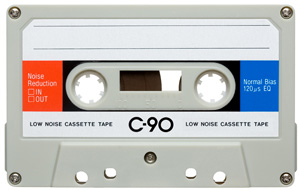
I created an online mixtape, on one of the most graphically sleek sites I’ve seen in a long while [muxtape].

You can hear it by clicking below. For bonus points, try to figure out the common thread which binds these songs together.

cassette_label.jpg

Update: Many people also swear by mixwit, which has a nice interface too. And you can make multiple mix tapes.

Update: Answer to the question in the subject line in the comments.

Generalized coordinates, trajectories, lagrangians, and action

I just spent 3 hours watching Leonard Susskind [Wikipedia page] deliver two lectures on Classical Mechanics via iTunesU. I started this over Winter Break (I watched 4 lectures), but I stopped because I didn’t have the proper time to devote. Once you stop, and enough time passes, you have to start all over [1]. Plus I hadn’t bought a pretty $15 notebook from Paris to take notes in.

But I started over, notebook in hand.

The end result of this is: I’m inspired. I love love love learning about trajectories, generalized coordinates, lagrangians, and principles of least action. Plus, there are some pretty neat digressions or mini-lectures I could use for my multivariable calc class next year.

I highly recommend it. You just need calculus (and some basic multivariable can’t hurt). It’s a bit hard to find on iTunes, but this link might take you to the first lecture. It’s his Stanford PHY 25 course taught in 2007 (October – December).

[1] It reminds me of borrowing the 1st season of LOST from my friend, who had the last seventh disc out on loan to a different friend. Once I finished the first six discs, I was hungry for the last. But still, the other friend refused to return it. And to this day, I have not seen the entire first season of LOST. Now, since so much time has lapsed, I will have to start the season all over again. (Double sigh.)

Pi Day, Pi Day!

3 point

14159265358979323846264338327950288419716939937510

58209749445923078164062862089986280348253421170679

82148086513282306647093844609550582231725359408128

48111745028410270193852110555964462294895493038196

44288109756659334461284756482337867831652712019091

45648566923460348610454326648213393607260249141273

72458700660631558817488152092096282925409171536436

78925903600113305305488204665213841469519415116094

33057270365759591953092186117381932611793105118548

07446237996274956735188575272489122793818301194912

98336733624406566430860213949463952247371907021798

60943702770539217176293176752384674818467669405132

00056812714526356082778577134275778960917363717872

14684409012249534301465495853710507922796892589235

42019956112129021960864034418159813629774771309960

51870721134999999837297804995105973173281609631859

50244594553469083026425223082533446850352619311881

71010003137838752886587533208381420617177669147303

59825349042875546873115956286388235378759375195778

18577805321712268066130019278766111959092164201989

38095257201065485863278865936153381827968230301952

03530185296899577362259941389124972177528347913151

55748572424541506959508295331168617278558890750983

81754637464939319255060400927701671139009848824012

85836160356370766010471018194295559619894676783744

94482553797747268471040475346462080466842590694912

93313677028989152104752162056966024058038150193511

25338243003558764024749647326391419927260426992279

67823547816360093417216412199245863150302861829745

55706749838505494588586926995690927210797509302955

32116534498720275596023648066549911988183479775356

63698074265425278625518184175746728909777727938000

81647060016145249192173217214772350141441973568548

16136115735255213347574184946843852332390739414333

and so on and so forth…

Paris, or bust

I’m going to be heading off to Paris on Sunday, taking a much-needed break from the daily grind. I might post something before I leave, but I’ll be gone until March 26th.There’s a good chance I’ll be bringing my lappy toppy with me, so you might get an update or two from the French capital, but in case you don’t hear from me, I’m (probably) a-okay

School Dance

I got roped into chaperoning a school dance.

Okay, you caught me. I was hoping for the opportunity since I started teaching. Why? I want to act as sociologist, studying the behavior of my students in a setting as much outside of the educational context as I’m going to see them. (Yeah, being in NYC, I see my students on the subway at random times and places, but that’s not this…) Adults aren’t acknowledged, at least not at my school dances. I and all my friends ignored all our teachers at homecoming and prom. I know what it’s like to be on the other side of the teacher’s desk. Now I’m curious what it’s like on the other side of the dance floor…

One teacher said that after she chaperoned a dance at her previous school, she couldn’t look her students in the eyes for the rest of the year.

Wow.

I’ll report back with general observations, if I have any. Stay tuned.

Update: The night wasn’t scandalous, and chaperoning was just a lot of standing around. The few observations I had:

  1. Old school Britney (“Toxic”) will get all students to the dance floor.
  2. Old school Britney will get the chaperones who are assigned the dance area to dance. (Yes, that was me.)
  3. Cutting off a poppy-electronic-song with a female vocalist (like many on the videogame Dance Dance Revolution) will cause howls of execration.
  4. 4. Playing Soulja Boy’s “Crank That” is the closest you can get to having a “High School Musical” spontaneous song-and-dance-number moment.
  5. You can earn bonus points with students if you find a tube of lip gloss at the end of the dance, and ask them: “Hey, this lip gloss belong to anyone? It be poppin'” [see this video for explanation]

I have not grown smarter….

Last week, I proctored the American Mathematics Competition (AMC10/12). Three students in mathclub showed up to take it, along with 4 other students.

When I was a student in high school, I loved these tests. Not only did the 25-question-test set my brain on fire, but the problems were actually do-able. I loved math competitions (e.g. the USAMTS, the New Jersey Math League contest). Not only did I enjoy those types of problems, but I enjoyed the competition aspect of it all. I liked that I was competing not just with myself, and others in my school, but also people nation-wide.

I didn’t excel much in high school. I mean, I got good grades, but I wasn’t an amazing writer, artist, computer programmer. But I did have math — that was mine. It was part and parcel of my identity.

After the test was collected and sealed, students tallied up their scores. [The scoring works as follows: 6 points for each correct answer, 1.5 for each unanswered question, 0 points for each wrong answer.]

Unfortunately for the mathclubbers, you need 100 points to move to the next round of the math competition (the American Invitational Math Exam — AIME), and none broke that barrier. So this year, our students are out of luck.

As a promise to the mathclubbers, I told them I would take the exam at home, under testing conditions (75 minutes, no breaks, no calculator). I got 16 questions right, no questions wrong, and left the rest blank. That gives me a score of 16*6+9*1.5=109.5, which would have qualified me for the AIME. In high school, I always scored around that level.

(And I was nervous that these high schoolers would school me on this test.)

The score is bittersweet. It meant that I still “have it” (“it” being the ability to do AMC problems). It also means that I have not grown smarter since high school.