I got an email from Rebecca Zook, who is a fellow math blogger, who was partially inspired by a post from forever ago (“Don’t Judge a Book By…“), asking me if I wanted a guest post on the same theme. Well, I’ve never had a guest post, and this is a darn good one, and now is as good a time as any! So without any more fuss and muss…
On Being Yourself While Doing Math
by Rebecca Zook
When I met my new math tutoring student and her mom wearing my celery green pantaloons and a dress that made me look like a fluffy yellow daffodil, I wasn’t sure how they would react.
They looked at each other. They smiled with relief. And then, they beamed at me. Next we got down to business and had a massively productive tutoring session.
This experience caused me to reconsider my entire philosophy of teaching attire.
My whole life I’ve had my own distinct style, whether that meant wearing galoshes without socks regardless of the weather (preschool) or making a dress printed with the solar system from an old curtain I found at Goodwill (high school).
But I started my career as a math educator by teaching SAT math for a big corporate test prep company. So, despite the fact that they hired me when I was wearing a homemade miniskirt printed with text from a French nursery rhyme and pictures of chickens, once I got into the classroom, I seriously curtailed my exuberance and dressed for my teacher-role. My efforts to wear business casual mainly consisted of me wearing the same pair of black slacks almost every time I taught.
Later, when I left the corporate world and started my own math tutoring practice, I still felt the need to dress “professionally” when I began to meet one-on-one with my own clients. I worried that if I really dressed like myself—instead of some idea of what a female math tutor should look like—students or parents would get turned off or distracted by my clothes.
But I started to ask myself, why was it “educational” to pretend to be less fabulous than I really am? Why not wear a really awesome outfit to teach in instead of trying to “look normal”?
In that moment, walking towards my new student and her mom, what I experienced was nothing like I’d feared. It was something totally different: appreciation, excitement, and even recognition.
What the heck was going on here? Why were they so clearly excited about me looking so different than they expected? They might just be relieved that I was a female math tutor that wasn’t afraid to be girly, or something.
Or, it might just be because my new immaculately student, who frequently came to tutoring sessions wearing a pristine corset paired with bloomers, high-heeled knee-high boots, and antique goggles perched on her head, just approved of my weird style.
But then I remembered some of my different students’ styles: the 18-year-old homeschooler with blond dreadlocks and a torso-length tattoo of a Buddhist goddess; the fifth grader wearing her private school uniform who fervently professed her love of Abercrombie; the seventh grader who wore classic rock t-shirts and cherished her florescent vintage sunglasses from the ‘80s.
I realized it was something completely different than my students liking my style.
It’s about being yourself while doing math.
I want to create a space where my students feel they can create their own solutions and find what’s best for them. I want to help my students gain true confidence in who they are, whether that means how they dress or how they think.
When a student spontaneously makes up a song about even numbers to the tune of Michael Jackson’s “Beat It”, or leaps out of their chair to spin a certain number of degrees to solve an angle measurement problem, I feel I’ve succeeded in helping them be comfortable with themselves and asserting their own choices.
Maybe finding and embracing your own learning style isn’t that different from finding your own fashion style.
Maybe I’m crazy here, but when students only see one kind of person doing math, maybe they’re getting a message that they have to be a certain kind of person or dress a certain kind of way to be good at math.
I believe that you do not need to restrain your awesomeness/exuberance to kick butt at math. In fact, the same passion, sense of adventure, and endurance that may lead someone to get a full torso tattoo of a deity can also serve them while mastering math problems.
You can learn math no matter what you look like, whether you’re into dressing like a daffodil, a Buddhist punk, or an Abercrombie fiend. And you definitely don’t have to act, or look, boring.
BIO: Guest blogger Rebecca Zook is an online female math tutor who has been helping students get math into their brains for seven years. Her blog, Triangle Suitcase, is about unpacking the process of learning in all its complexity, frustration, and delight.
MY THOUGHTS: If you’ve ever met me in real life (well, only two or three of you have), you know I am a lot of … something. And I love that about me. In high school, I was big into shopping at thrift stores and pairing together plaid golf pants with a pair of silver spray painted shoes with a ratty old tshirt. I was a clothing bricoleur. There are lots of reasons for that, but the consequence was that my sense of self was tied up in how I dressed. I saw myself as an unconventional almalgam, and my clothes were a conscious reflection of that. Well, because of that, I fully support students expressing that sense of self. And Rebecca has tied this same thing — this sense of individuality and choice and confidence — to how students do math. I like that. I also really was struck by this line:
Maybe I’m crazy here, but when students only see one kind of person doing math, maybe they’re getting a message that they have to be a certain kind of person or dress a certain kind of way to be good at math.
Holla! That gets to the crux of why diversity is important. It’s why we need female science teachers teaching AP courses, and female leaders in student goverment, and a diversity of ethnicities, religions, and sexual orientations in visible places in schools. You don’t need to be a guy to be great at math, and you can be gay and good at sports, and you can be a girl and in charge of student government. So yeah, it’s just clothing. But it’s kind of something more, if you look at it from a slightly different angle.
 Now, I’ve added a single image, in order to help students more effectively learn how to study:
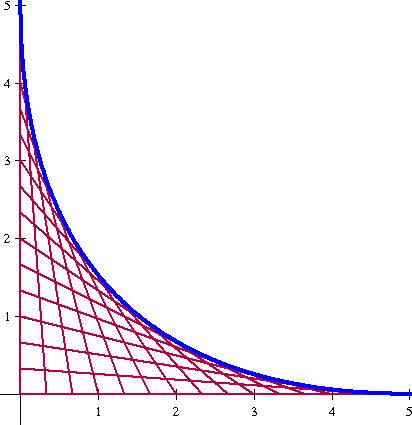
 and
and  and the other with endpoints
  and
and  .
. closer and closer to 0, these two lines are getting closer and closer to being identical. But right now,
  (any of the red lines)
 (any of the other red lines)
 s equal to each other and solving for
  , we get:

 form if we just plug in
  , so we must L’Hopital it!
 .
. coordinate is:
 mean anyway?
 business? It’s confusing. I like to think of it like a parameter! As I move
  and
and  , I am going to get out all the points on the blue curve.
 and
and  .
. .
. .
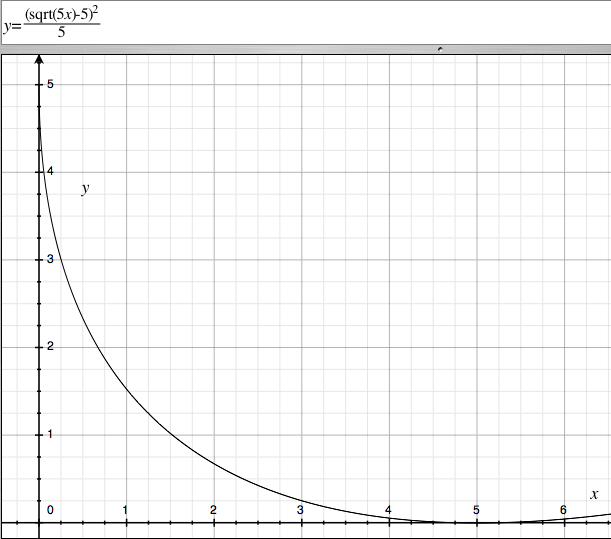
.
 Continuous Everywhere but Differentiable Nowhere