Untagged/Other

Best! News! Ever!

I just got my second “the summer is winding down but don’t worry it’s not really over, but actually, wait, here is a package of information for you, so that you can’t pick up your margarita without thinking how few are left to imbibe in the freedom that has been your summer” mailing from my school.

No, silly, that’s not the best! news! ever!

It’s my schedule. I knew what I was teaching this year (natch!), but I didn’t know that… wait for it… drum roll… brrrrrrrrrrrrrrrrrrrrrrrrrrrrrrrrrrrrrrrrrrrrrrrrrrrrrrrrrrrrrrrrrr

I get to have all my classes in the same room.

YESSSSSSSSSSSSSSSSSSSSSSSSSSSSSSSSSSSSSSSSSSSSSSSSSSS! (The crowd roars!)

For context, last year I was in 3 different rooms: one of them was in this room that I wouldn’t have wished upon my teaching nemesis, if I had one, and another one was in the middle school which is hard to get to in the passing period (well, it was a 7th grade class, so that’s a bit legit).

Take a moment, and close your eyes. WAIT! Then you can’t read this. But imagine yourself with your eyes closed imagining the following, if you will:

You walk down half a flight of stairs from my office and enter the science wing. You turn left and in front of you, a science room. Not just any science room. A very spacious science room, with two rolling whiteboards (love it!) in addition to the SmartBoard. The austere black lab desks/tables each seat two students. Now rearrange these desks set up in a “U” shape, where the “U” faces the SmartBoard. Peeking in, you see eager young faces looking with admiration at their teacher — they can’t believe he has moved up in the ranks so quickly to have somehow gotten such a room. The teacher does a quick sweep of his domain, and indicates he’s about to speak. The students rush to pick up their pencils, their heartbeats beating faster in excitement. “What’s about to be said? What sage words will he impart to us?” they think. “Math,” he says, followed by a very pregnant pause. “Is about the coolest thing ever.” A sea of heads start nodding vigorously, while thunderous applause fills the vast room, echoing through every nook and crevice.

Darn, I lost my train of thought. And dude, where’d my margarita go?

Digication $latex \neq$ Digital Portfolio

UPDATE: I have given up on digication and created my portfolio at wordpress: samjshahportfolio.wordpress.com.

As the summer winds down, I’m looking at my to do list — parts of which have languished because they were left unattended. One item was to check out digication, this site that my school subscribes to which allows students and teachers to make online portfolios. (My first attempt at a portfolio didn’t really turn out great. And then boxtr.com deleted all my files. Suck.)

I spent a number of hours today trying to knock “explore digication” off my list, and lo and behold, I now havethe embryo of a digital portfolio.

Yes, it needs more content. Yes, the organizational structure isn’t there. But hey, you gotta start somewhere.

However, if anyone else out there is so inspired, let me please save you from digication. It has all the functionality of… well… a lobotomized WordPress blog. Ummm. Yeah… Actually, that’s exactly right. I’ll explain in a bit. So here’s the deal. I was looking for something which could organize a lot of content easily, which had a good file manager, which was fully customizable with lots of themes/skin options, and which would hook up nicely with lots of the new websites out there (e.g. vimeo, slideshare).

Some problems with digication:

  1. There are two types of “modules” — picture boxes or text boxes. If you have pictures, they get displayed. Great. But if you want to make them links? Oh, you can’t. Or if you have a text box and want to insert a picture in it, the picture can be at most 500 pixels long. In other words, you are using a website which is supposed to let you create a website about who you are, but the website sends ninjas to your home to tie your hands behind your back and force you to swim in a very salty pool.
  2. You can’t mess around with the HTML code. Which doesn’t sound so horrible, right? You have a nice WYSIWYG editor, which allows you to change font colors and sizes with the click of a button. However, let’s think of something totally crazy, like maybe wanting to put up a slideshow from slideshare, or a video on vimeo, where you have to put some embed code in the HTML. You can’t. So you’re stuck only putting in videos from the sites youtube and teachertube, which are built in options. Not going to happen, buddy.
  3. You can’t change the background, or any of the style. You can upload one banner picture (see mine above), you have about 6 fonts to choose from, and you can’t change the fonts of the page titles. There is also a lot of wasted space (especially on the left hand side of the page).
  4. There isn’t a good file manager (that I could find anyway). Okay, let me rephrase. I couldn’t find any file manager. So say you upload a picture, and then decide to put it in a different page. Well, unless I’m missing something (and I hope I am), you have to delete the picture and then re-upload it on the other page. (Seriously.)
  5. I wanted to have the RSS feed of this blog import to one of the pages of the portfolio, so you could read the blog there. Mainly so everything is current. Well, I couldn’t figure out how to make that happen.
  6. You can create various “header” pages, and then sub pages within them. (So, for example, I have a page on Technology, and under that, I have a page on SmartBoards.) Great! But you know what would be even better? I want sub-sub pages. Because wouldn’t it be nice to have, say, a page under that called “Algebra II” or “Calculus” which contains my SmartBoards from those classes?
  7. You can’t load PDFs for display and scrolling.
I know I could make a way, way better portfolio on a WordPress blog, because it would allow me to do most of the things I can’t do in digication (except for maybe #6). See, for example, my Multivariable Calculus Resource Page, which I created on a WordPress site but is not anything like a blog. Now imagine that with pictures, videos, worksheets, teaching philosophies, etc.! Phew! Good stuff.
But hey, I’ll stick with this for a while, because my school is paying for it. And I hate to see money go to waste.

Stunning photographs of the LHC (or get a load of the new Teilchenbeschleuniger)

The Big Picture (from the Boston Globe) has a series of stunning photographs of the Large Hadron Collider, about to go into business! If you don’t know what the LHC is or what it does, you should definitely watch this amazing and short TED talk by Brian Cox.

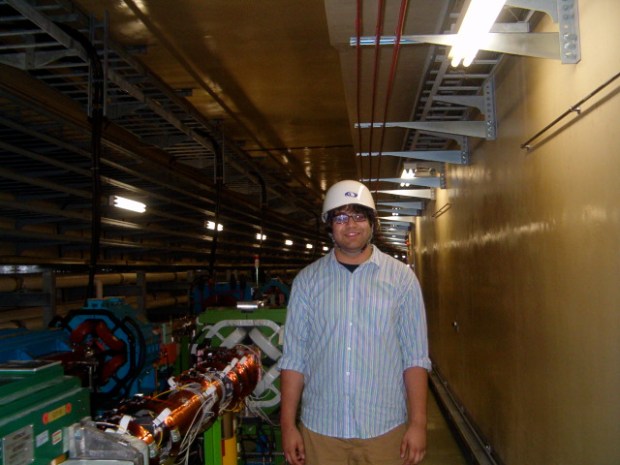
Even though I doubt I’ll get to see this machine in person, I was given the opportunity to visit the KEK (the National Laboratory for High Energy Physics) in Japan in the Summer of 2006. Because it was summer, and it was too expensive in the summer months to run the monster, I got to take a tour of the belly of the beast, and it was stunning.

Aesthetically beautiful. A meshing of the absolutely miniature (particles), the hardware-store size (the magnets that hold the beam of particles to a confined track), and the enormous (the detectors). There’s something almost absurd with it, like using the elephant in the room to find a needle in the haystack. (It’s so absurd that not even a single metaphor can capture it.)

I wish I were an expert on Particle Physics. In fact, I wanted to write my dissertation on the history of particle physics (somewhere in the time period from the 1940s to the 1970s). But alas! I think I shall always have to sit on the sidelines, heroicizing while remaining ever befuddled.

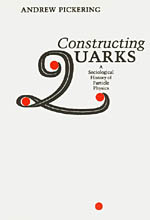
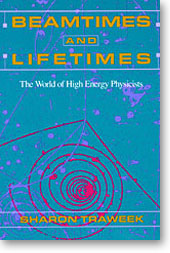
In honor of LHC excitement, my favorite book recommendations for the history of 20th century physics are below (click for more information):

Kaiser: easy-medium read | Pickering: hard read | Galison: easy-medium but long read | Traweek: easy read

A picture of me in the KEK wearing a hardhat and grinning uncontrollably? Priceless.

Good or Bad: This valedictorian speech

“And god, after 18 years of math, aren’t you so sick of formulas?” Pshaw.

What do you think? This wasn’t me, at graduation. I did feel strongly about my (second) high school, and much of it negative, but I wasn’t bitter. I left with a lot of great friends, which made my time less like a prison and more like… well… high school.

But is this video reflecting the sentiment of the majority of our students after senior year? I’ve met a lot of people since high school, and I’d say a good majority of them don’t look back on high school with a sympathetic eye. I do. (I wonder if a lot of high school teachers do. It would make sense, anyway.)

Last year I taught only one senior class. This coming year I’m teaching three.

It’s my birthday tomorrow!

Tomorrow is my birthday!


I will be turning 27, which is truly the most significant birthday I’ve had to date. This is how I figure it. I was born on August 3rd, and I didn’t get to enjoy my golden birthday, because I was too young to appreciate it. (For those of you not in the know, golden birthdays are when you turn the age of your birthdate, in my case 3).

But shouldn’t turning 27 be even more precious than my golden birthday, because it’s (goldenbd^{goldenbd}=3^3)? I have decided it is so, and will designate it my platinum birthday.

In totally unrelated news, MIT’s magazine Technology Review has two really good puzzles in their puzzle corner. I think I solved them, but since they are the kind where you send in your answers, I won’t post the solutions here. Just the problems, for you to mull over.

  • Jerry Grossman has equipped n children with loaded water pistols and has them standing in an open field with no three of them in a straight line, such that the distances between pairs of them are distinct. At a given signal, each child shoots the closest other child with water. Show that if n is any even number, then it is possible (but not necessarily the case) that every child gets wet. Show that if n is odd, then necessarily at least one child stays dry.
  • Each of logicians A, B, and C wears a hat with a positive integer on it. The number on one hat is the sum of the numbers on the other two. The logicians take turns making statements, as follows:
    A: “I don’t know my number.”
    B: “My number is 15.”
    What numbers are on the hats of A and C?