Author: samjshah

Arc Length of Lissajous Curves, or Pretty, Pretty Pictures!

In MV Calc today, we were learning about arc length. In 3D, if you have parametric equations defining a curve, you can find the arc length by calculating:

L=\int_a^b \sqrt{(\frac{dx}{dt})^2+(\frac{dy}{dt})^2+(\frac{dz}{dt})^2}dt

I asked them to calculate the length of this curve, which will repeat itself, over and over and over:

x(t)=\cos(3t), y(t)=\sin(5t), z(t)=\cos(2t)

If you graph it, it looks like this (it’s a 3D Lissajous curve):

Vodpod videos no longer available.
more about “2008-10-27_1849“, posted with vodpod

Which is awesome! They had to figure out the limits of integration (the function will go back to it’s original starting point when t=2\pi, so the limits of integration are from 0 to 2\pi. And we had to use our fnInt function on our graphing calculators to actually calculate the length. But it was cool.

During the class, I starting thinking of all the extensions and projects that could come out of this. For example, we could have students study x(t)=\cos(at), y(t)=\sin(bt), z(t)=\cos(ct). If a, b, and c are all rational numbers, we can prove that the curve will repeat itself. However, as soon as we make one of them irrational, we can prove the curve will not repeat itself. Look at this video to see how cool it looks!

Vodpod videos no longer available.
more about “2008-10-27_1852“, posted with vodpod

What if all three (a, b, and c) are irrational? What constraints do we need if we want the function to repeat? (The answer won’t be tough, I imagine, but worth exploring.)

Also, on the subway ride home, I wondered if we could come up with an explicit formula (rather than parametric) for a surface containing every point on the curve. (A harder question, for sure.)

And another: what is the smallest volume you can design to enclose a curve which does repeat, like x(t)=\cos(3t), y(t)=\sin(5t), z(t)=\cos(2t). Since sine and cosine bounce between 1 and -1, I will say that your volume had better be better than 2^3.

Terminology, Notation, Ideas

In my (non-AP) calculus class last week, I was teaching my students about continuity of a function. Before we started, I asked them what continuity was, and students in both sections started their answer by saying “well, it’s when you draw a function and you don’t have to lift your pencil.” Some spoke of holes and asymptotes. Others spoke of endpoints.

I then proceeded to wow them by saying — all that they said could be encapsulated mathematically. The act of tracing out a function knowing where you’re going to have to lift it can be rewritten with three rules. They weren’t as impressed with that fact as I was, but I still tried to convey “Think about it! You can translate moving your hand across a page smoothly into mathematical statements.”

What’s needed for continuity of a function f(x) at x=c:

1. f(c) is defined
2. \lim_{x \to c}f(x) exists
3. \lim_{x \to c}f(x)=f(c)

I did the most obvious *you need to memorize this for tomorrow* wink-wink nudge-nudge that I possibly could. I might have even *coughed* the words “pop quiz.”

I just graded the quizzes. Horrible. HORRIBLE.

I got things that show no understanding of the symbols of calculus or what continuity means. Some examples:

(a) function f(x) exists
(b) f(x)=f(c)
(c) \lim_{x \to c}f(c) exists
(d) one value for f(x)
(e) the two-sided limit of c exists
(f) the two-sided limit of x is equal to c
(g) the function has to be continuous (you cannot pick up the pencil)
(h) \lim_{x \to c}f(x)=c

There are some major notational misunderstandings, but also part and parcel, some conceptual misunderstandings. I mean, for example, “the two-sided limit of c exists” doesn’t really mean anything useful to us. First of all, it should be the limit of the function, and second of all, it doesn’t say the limit as x approaches something.

I typed a bunch of these out and we’re going to talk about them in class tomorrow. Hopefully we’ll get to parlay that into a discussion of notation, the precise meaning of math symbols, and the importance of listening to Mr. Shah’s coughs.

Student Faculty Judiciary Committee

This year I’ve decided to be a faculty representative on the Student Faculty Judiciary Committee (SFJC).

I’m sure I must have talked about SFJC before, because I went a lot last year. I was called in to answer questions about some cheating incidents that happened in my class, and I went in as an advocate to my advisees for a few different issues.

This committee, in my opinion, is one of the best things about my school. It is comprised of 8 students (two students from each grade, elected by their peers), 2 faculty representatives, and 1 faculty adviser. When students violate the community standards laid out in the student handbook — be it anything from chronic lateness to cheating to theft — students are referred to the SFJC. It’s scary for students: they see it as a judging by their peers.

However, from what I’ve seen when I was called before the SFJC to answer questions or when I was advocating for one of my advisees, I didn’t see anyone judging. Instead I saw a place where students are asked, by other students, to reflect on their actions.

Standard questions seemed to be: “Why do you think the rule was in place?”, “What went through your mind as you were breaking the rule?”, “Who was hurt by this violation?”, and “What actions have you taken, or do you intend to take, to prevent a repetition of the same action in the future?”

Discipline becomes a learning process.

After the hearing, the committee deliberates and makes a recommendation for consequences which goes to the administration, who then decides to accept it or send it back to the committee with potential changes outlined. Standard consequences are being put on warning, in-school suspensions, and out-of-school suspensions.

Students (and faculty!) have to arrive at school at 7:30am when there are cases. This adds up to a not unsubstantial amount of given up by the members. I was so impressed with the committee’s work last year that I nominated the committee for an award (for a person or club which promotes school values) — that it ended up winning. In the nomination form, I said that the SFJC members are the unsung heroes who conscientiously and selflessly provided the backbone to our community by enforcing its values.

Even though I dread the idea of waking up 15 minutes earlier, and I cringe at the idea that I won’t be able to make photocopies before school on the day with cases, I felt like it would be crazy not to be a representative on the committee this year. The work they do is so integral to the school, it is work with meaning, that it’s a sacrifice I think I’m happy to make. (We’ll see once I take my seat on the committee.)

The four hour training session for this year’s committee members happens tomorrow (Sunday), and cases I’m sure will be heard next week. Here’s to hoping that my idealism isn’t shattered when I see the process from the inside.

Multivariable Calculus Problem Sets

As you probably know, I’m teaching Multivariable Calculus this year, and I came into the course with a vision: a collaborative, problem-solved based class, where students aren’t motivated by exams and grades, but rather by the challenge of thinking for themselves.

(Of course, getting really great, full-of-personality students helps too!)

The problem sets seem to be working out well. (As of now, I’ve gotten or adapted most of the questions from Anton; but I’m going to be integrating more questions from other sources.) At the end of the course, I’ll probably post them all my Multivariable Calculus Website, but for now I’ll post what they’ve been given:

multivariable-calculus-problem-grading-rubric
problem_set_1a
problem_set_1b
problem_set_2a

Of course I’ll be asking my students to reflect about this course, and the problem sets, and the very different setup. I’m more than curious as to what they’re going to say. I’m also hoping to get permission from my students to scan in their solutions, so you can see the evolution (or not) of how my students communicate mathematics.

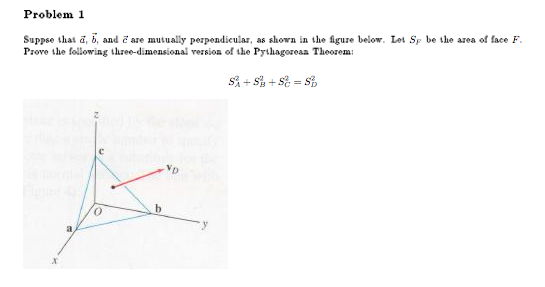
You can see two of my favorite problem set problems below.

Concepts and Problems

In my classes this year, I’ve been really concertedly trying to emphasize that students need to really understand concepts and explain ideas in written form clearly. Today I’m faced with a conundrum about how students are connecting concepts with the problems we’re doing.

On my Algebra II quiz, I asked:

Explain — using complete sentences and proper mathematical terminology — why \sqrt{-16} doesn’t have a meaning [in real numbers], while \sqrt[3]{-8} does.

I was really, really, really pleased with my class’ answers. In the course of their explanations, almost students mentioned that \sqrt[3]{-8}=-2. Literally on the same page, however, was a set of radicals that I asked students to simplify. One of them was, gasp!, \sqrt[3]{-8}. It was an oversight on my part and I will probably change if I use parts of this quiz next year. Can you see where I’m going with this?

There were a few students would could do the conceptual work — who even showed that \sqrt[3]{-8} was -2 in their written explanation — who didn’t get the exact same question right below it correct.

Color me flabbergasted. (What is that, a pukey yellow?) It’s just so hard to figure out what was going through their heads.

Mathclub Hat Problem

One of the students in Math Club recently put his own twist on the age old hat question: Assume you have n people, each of whom has a red or green hat put on them. They each don’t know what color hat they have on. However they can look around and see everyone else’s hat.

After getting to spend some time in a room looking at everyone else and their hats (they may not communicate in any way), they are each placed in separate cells and asked to say whether they have a red hat on, a green hat on, or “pass.” Everyone wins the game if at least one person says their right hat color, and no person messes up their hat color. Everyone loses the game if everyone passes, or if anyone says the wrong hat color.

The question is: what is the strategy that those wearing the hats should come up with beforehand? And can you come up with a formula giving the probability that n people win with that strategy?

To make the problem clear, let’s examine the three person case. The possible combinations of hats are:

RRR | RRG | RGR | GRR | GGR | GRG | RGG | GGG

The best strategy we could come up with is to say: if you see two opposite colors (a red and a green), say “pass”. If you see two hat of the same color, say you’re wearing the opposite color.

So you’ll lose with RRR and GGG (everyone sees two of the same color, so everyone will say the opposite color).

But you’ll end up winning with RRG, RGR, GRR, GGR, GRG, and RGG. Let’s look at RRG to explainThe person wearing the first red hat sees a red and green hat. So that person says “pass.” The person wearing the second red hat sees a red and a green hat. So that person says “pass.” The third person wearing the green hat sees a red and a red hat, so that person says “green” and is right! So RRG is a winning combination. Similar arguments follow for the other five.

Since there are 8 possible combinations of hats, and 6 of them have a winning strategy, there are 6/8 chances that everyone will come out a winner! (That’s a whopping 75%!)

So we’ve been investigating what the strategy will be for n people wearing red and green hats. So far, we’ve done pretty well. In fact, we’ve even gotten Pascal’s Triangle involved, which is always great.

And there seems to be a consensus among the students (though no proof yet) that if you have any even number of people playing the game, say 8, you can actually get better odds of winning if you ask another person to join in (so you’d have, say, 9 people playing). That seems totally counter-intuitive, that adding an extra person to play the game with you would lead to a better chance of winning. So if they’re right, I’ll chalk this problem up to a win.

PS. We did talk about the Bloxorz problem for two weeks, but students grew bored and tired of it. I still think it’s a great problem. Maybe one year a student will want to do an independent study on it, and ask me to be the adviser to the project.