NEWS: You can now access the “Favorite Tweets” series by clicking on the menu on the upper right hand side of the header. (Wow, things are getting FANCY up in here!) This is the last “Favorite Tweets” that I will be posting on the blog itself. All future “Favorite Tweets” will go directly there. I don’t think they’ll show up in your RSS readers, but you’ll know when I post a new one via Twitter. And aren’t you guys on Twitter the only ones who really care, anyway?
Here’s #1 and #2 and #3 and #4
…
samjshah @dcox21 i don’t actually teach my kids in reg calc about sequences. but i think if they get the IDEAS behind it, that won’t matter.
samjshah @dcox21 plus, depending on the sequence, i’ve seen it written both ways (0th term and 1st term)… plus they’ll forget it before 11/12th gr.
dcox21 @samjshah Forget? You underestimate me?
…
k8nowak I hate when my new favorite song turns out to be three years old.
SweenWSweens @k8nowak Has Bieber really been putting out songs for 3 years now?
k8nowak @SweenWSweens You just get me, Sweeney. It’s scary.
…
samjshahARGH!!! #itssundayandireallydontwanttoplanfortomorrowanditsgettinglaterandlaterandimjustnotabletostarttogetittogether
…
ddmeyer This just hit me hard: the same curriculum that pushes our students away from what’s great about math does the same thing to their teachers.
…
mctownsley @samjshah Counting Crows – Mr. Jones! I had a friend in college who mixed up the lyrics. Instead of “Mr. Jones and me…” ..
mctownsley @samjshah (con’t) she thought it was “Mr. Snowman Yee” she’s never lived this down. #nojoke
…
ddmeyer I attended the “Western Caucus” at NCSM. I’m curious how the board will attract new teachers (most of whom caucus online) to that format.
ddmeyer Put another way, “caucusing” (especially in this context) seems more relevant to an age when we couldn’t connect instantly online.
samjshah @ddmeyer on that note of caucusing online, why aren’t you on this map?: http://maps.google.com/maps/ms?hq=http:%2F%2Fmaps.google.com%2Fhelp%2Fmaps%2Fdirections%2Fbiking%2Fmapplet.kml&ie=UTF8&dirflg=b&hl=en&msa=0&msid=102961433061679876855.000484f12a77524f148fe&ll=39.300299,-93.339844&spn=31.685063,79.013672&t=p&z=4
ddmeyer @samjshah What the hell is that?
ddmeyer @samjshah Why haven’t you added me?
ddmeyer @samjshah Hurt.
samjshah @ddmeyer everyone added themselves! it was a bit of a crazy frenzy on twitter yesterday. see my recap at the bottom of https://samjshah.com/2010/04/25/favorite-tweets-4/
cannonsr @ddmeyer Yeah, dude. You were being too cool hanging out at an actual conference. Such a diva.
JackieB @cannonsr Hey, I was at the actually conference. /And/ I added myself to the map, don’t let @ddmeyer off the hook that easily.
…
welikesnow Tip: Don’t cut your leg with a chainsaw, even a little bit.
…
misscalcul8 How do I get them to think?
JackieB @misscalcul8 Give them good problems, ask questions, then don’t answer your own question. Wait. And wait. Repeat if necessary.
…
k8nowak “Please don’t call me ‘Mom’. It makes my uterus clench in terror.” – Me to 5th period.
…
SweenWSweens Recently all this evidence is pointing towards me being an adult… but I don’t buy it!
…
RobertTalbert OH: “I love when I walk down this hallway and see all the lights on, because it means that mathematics is open!”
…
approx_normal Student: “I heard our lesson is hard today.” Me: “What’d did you hear was so hard?” Student: “I heard we have to think.”
…
CardsChic Busted. “How did you come up with this idea? Did you just make it up today, or did you steal it from someone on twitter?”
…
hemantmehta I named my iPod “The Titanic,” so when I sync my iPod, it says “The Titanic is Syncing.” (via a student) #fb
…
jimwysocki My seniors have so checked out. I got so annoyed with them today that I walked out of class.
SweenWSweens @jimwysocki One time I got so upset with one of my classes that I fake quit.
jbrtva @jimwysocki that’s how I felt today…with my Alg1 class (fresh/soph) #commisserating
…
samjshah the most fabulous thing, though, was getting a HUG from @k8nowak. yes, you heard it here first. she does hug. you just have to booze her up.
dcox21 @samjshah @k8nowak She’d gonna punch you in the neck for hugging and telling.;-)
dcox21 @jybuell @samjshah @k8nowak I believe it happened. Didn’t you notice her talking about shoes last night? New shoes and hugs? What’s next?
…
samjshah @RobertTalbert i just finished FTC II in calculus. that was … fun.
samjshah @RobertTalbert “WHY DO WE HAVE TO KNOW THIS?” “Because it is FUNDAMENTAL. And the sequel is better than the original.”
…
lpudwell apparently “there are i balls in this box” sounds a lot like “there are eyeballs…” even to a combo class that’s used to balls in boxes. :)
…
CmonMattTHINK In the future, if I ever tweet something about considering giving a take-home test, somebody please smack me upside the head.
…
k8nowak @samjshah this tweet is coming from INSIDE THE HOUSE!
samjshah @k8nowak i see dead people. BRAINS, CLARICE.
cannonsr @samjshah @k8nowak Huh. Wouldn’t have pegged y’all to become a horror movie. But somehow not surprised.
…
JackieB No idea what my husband is watching on the TV, but his yelling “Don’t look at the TV” did not have the intended effect. Gross.
…
dcox21 Sorry, but you don’t prune cotton. #needaredstamp #FarmProject
k8nowak @dcox21 nobody needs that stamp. except you.
…
k8nowak @jreulbach Find a worked out example you want to practice, put a blank page next to it & copy the problem. Cover the example with your hand.
k8nowak @jreulbach Do as much as you can, compare it to the existing work, copy when you need to. Repeat until you can do it without comparing.
…
k8nowak By the way, if @samjshah ever offers you a tour of Brooklyn, take it. Trust me.
…
dcox21 @k8nowak Honestly, while on the train, how many times did the phrase “no sleep till…” enter into your head?
k8nowak @dcox21 Wow. Zero. 7th grade me would be so disappointed in me.
dcox21 @k8nowak Oh, c’mon. I sang it at least 10 times cause I knew you were going.
k8nowak @dcox21 Well, 7th grade me thinks you’re rad.
dcox21 @k8nowak You just earned your 7th grade cred back with an appropriate use of “rad.”
…
ThinkThankThunk @samjshah This twitter thing is totally worth it just for your links. I’m showing all of these videos tomorrow!
…
k8nowak Der Subs: I don’t want to read an aria about how every kid deviated from acting like a perfect angel. Just effing deal with it.
k8nowak “Students asked questions about the yellow packet &the period ended before I started the lesson.” You were just. Supposed. To. Collect. It.
…
samjshah @ddmeyer why are you not yet on this? http://maps.google.com/maps/ms?hq=http:%2F%2Fmaps.google.com%2Fhelp%2Fmaps%2Fdirections%2Fbiking%2Fmapplet.kml&ie=UTF8&lci=bike&dirflg=b&hl=en&msa=0&msid=102961433061679876855.000484f12a77524f148fe&ll=40.713956,-74.003906&spn=61.260704,158.027344&z=3 ADD YOURSELF
ddmeyer @samjshah How do I do that? You and Riley are the only collaborators with editing privileges.
cannonsr @ddmeyer Really? The edit button was enough for the rest of us. (Maybe collaborate first.)
ddmeyer @cannonsr @samjshah Hmph. Edit button needs to be a little bigger if you ask me. I’m good now.
cannonsr @ddmeyer You’re the one with the Google connections to change it.
k8nowak @ddmeyer Agreed. If only we knew someone who worked at Google. We could tell them.
ddmeyer @cannonsr @k8nowak I’d rather blame @samjshah.
…
Fouss @smallesttwine We had a fire drill when I was in hs and taking an AP test. Hmm – maybe that’s what I could blame my score on. :)
samjshah @Fouss i had to take my AP calc test in the autoshop room which smelled STRONGLY of bleach. why? kids earlier in the day pooped in the room.
samjshah @Fouss PLUS a horrible daddy long legs spider crawled on my desk. i am TERRIFIED of spiders. so i had to call the proctor over to remove it.
samjshah @Fouss there MIGHT have been some yelping and gasping and panting involved. you may cue your imagination of this scene in 3… 2… 1…
smallesttwine @samjshah AHHHH!!! I just actually screamed out loud. Not sure what is worse, poop or spider.
Fouss @samjshah Can’t stop LOL… seriously (or not, I guess). And yet you still got a 5, right?
Fouss @samjshah It’s the yelping and gasping and panting that’s killing me.
jreulbach @samjshah OMG, poop and spiders? What the hell goes on in shop class??
samjshah @Fouss obvi. neither autorooms nor bleach nor poop nor spiders shall keep this mathlete from the swift completion of his AP calc exam. 5.
Fouss @samjshah I would expect nothing less.
…
sig225 It’s spelled i-s-o-s-c-e-l-e-s #needaredstamp Otherwise, it’s a comb & perms question given the number of different things students write
…
hemantmehta An AP photographer was in my classroom today. I told the kids to applaud when I enter the room & bow down to me. They refused. Dammit. #fb
…
dcox21 @samjshah But we could saddle one [spider] up and you can take it for a ride to the restaurant. Oh, well, your loss.
SweenWSweens I was thinking about not ebaying the 4th mathblogroadtripmobile seat and saving the room for my prized spider collection instead.
Fouss @samjshah I’ve got kids – I’m ok with shrieking. And as long as the blood is @SweenWSweens and not mine, go for it.
…
samjshah there was almost no positive today, except for one thing, which was huge for me. one kid who i taught in 10th and 12th grade said that…
samjshah… he wanted to take me to college with him, because i was the only person who was able to make math make sense to him. i melted.
…
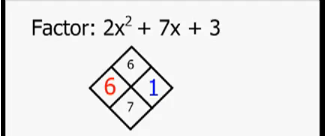
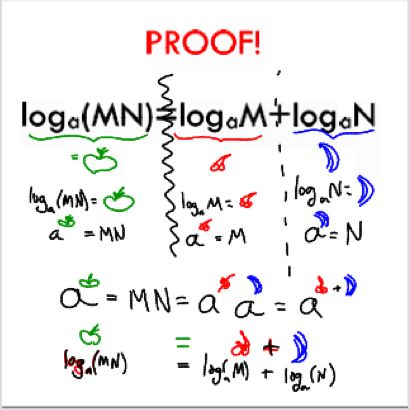
samjshah you know when you feel like soon you’re going to have too many variables on the board and kids will freak out? http://brizzly.com/pic/2CTX

k8nowak @samjshah what are those green things? turnips?
dcox21 @samjshah @ddmeyer Kinda what I thought too.
park_star @k8nowak I was guessing sad apples.
CarissaJuneK OMG @samjshah…that log proof is amazing. I like the apples, cherries and bananas :)
samjshah @CarissaJuneK WINNER! she got all the fruits, because she has EYES. seriously, @k8nowak @park_star
k8nowak @park_star maybe the bananas are sad. you know, since they are blue.
park_star @k8nowak good point. I was actually going to say colorabi, but then I wasn’t sure if anyone would know what that was.
dcox21 @CarissaJuneK @samjshah I think those “apples” are tomatillos.;-) @k8nowak
…
samjshah @ddmeyer might you promote @k8nowak‘s binomial expansion contest on your blog? i bet we could get some good fodder for convo from these vids
jybuell @samjshah I’m hurt u didn’t ask me to promote. Over 12% of the people who share half of my genes have read at least one post
jybuell @samjshah I’ll just tell all my subscribers about it next sunday dinner
…
SweenWSweens @hemantmehta @jbrtva Make sure you go out for coffee afterwards. ZING! I’ve been waiting on bringing that one back for months now.
jbrtva @SweenWSweens @hemantmehta We’ve affirmed our “just friends” status long ago…coffee shops unnecessary. :-) well played, though
…
Fouss @samjshah I killed a spider in my closet today and thought of you.
…
misscalcul8 Give time limits. Students don’t pay attention to 5, 10, 15. Try 7. #pippens
…
cannonsr @JackieB @ddmeyer 1 of 3) Been trolling the academic journals. Keep running into conclusion….
cannonsr @JackieB @ddmeyer 2 of 3) that building online communities apart from physical ones doesn’t happen often.
cannonsr @JackieB @ddmeyer 3 of 3) Frustrated by my reality vs research reality. Given my position, that’s not a bad thing.
…
sumidiot getting excited about spending my evening proctoring an exam. wait, what? no, that’s not right. dammit.












 to
to  and have that cancel with the other
  in the integral. That’s when I realized my huge mistake… after 5 minutes of hunting.
 . In fact, it equals
  . And this small distinction makes all the difference in the world!

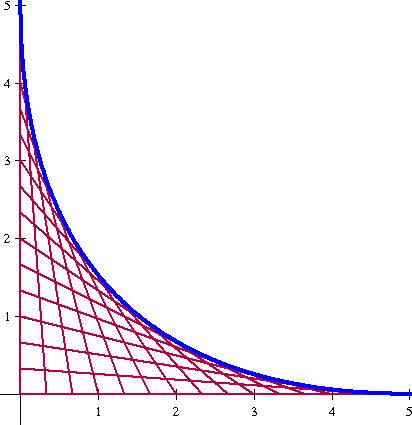
 and
and  and the other with endpoints
  and
and  .
. closer and closer to 0, these two lines are getting closer and closer to being identical. But right now,
  (any of the red lines)
 (any of the other red lines)
 s equal to each other and solving for
  , we get:

 form if we just plug in
  , so we must L’Hopital it!
 .
. coordinate is:
 mean anyway?
 business? It’s confusing. I like to think of it like a parameter! As I move
  and
and  , I am going to get out all the points on the blue curve.
 and
and  .
. .
. .
.
 Continuous Everywhere but Differentiable Nowhere